
Are Online Gaming Platforms Safe and Legitimate? A Guide to Licenses, Offshore Casinos, Account Security, Games, and Genuine Bonuses
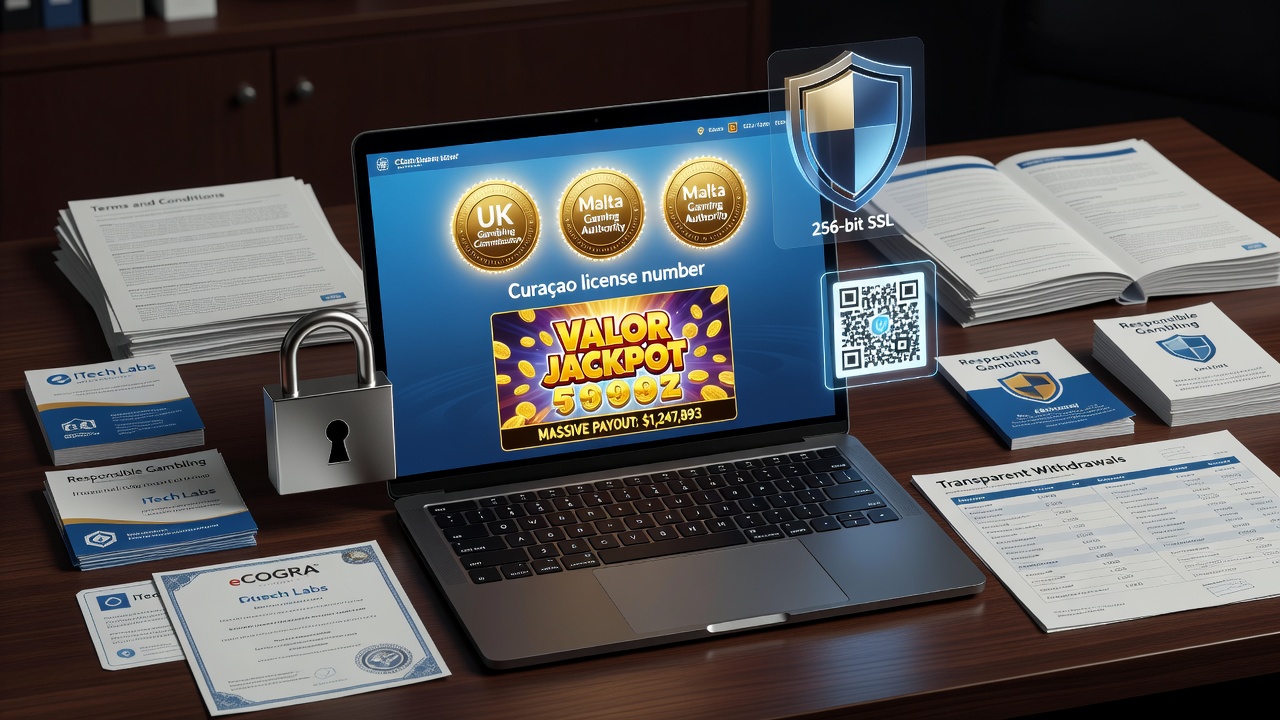
Roughly four out of five new online casino accounts are created without the player ever checking who actually regulates the platform. That single fact explains most of the horror stories circulating in gambling forums: frozen withdrawals, vanished balances, bonuses that turn out to be traps rather than gifts. The good news is that the industry is not a lawless frontier. Legitimate regulators, verifiable license numbers, and independent auditors exist precisely to separate operators who play fair from those who don't.
The trouble is that spotting the difference requires knowing what to look for, and most players never learn this before they deposit their first payment. A license number buried in a footer, a certificate from an unfamiliar authority, a bonus with terms nobody reads - these details either protect you or expose you, depending on whether you understand them. Some platforms built around a single flagship product, such as a branded slot or a jackpot network like valor jackpot, invest heavily in licensing and transparency precisely because their reputation depends on it. Others invest that same energy into marketing instead.
This guide walks through exactly how licensing works, why offshore jurisdictions aren't automatically a red flag, how to lock down your account against the most common attacks, what kinds of games are actually available, and how to tell a genuine bonus from a marketing trap. By the end, you'll have a practical checklist rather than a vague sense of unease.
Understanding Online Gaming Platform Safety
Safety in online gaming isn't a single feature - it's a combination of regulatory oversight, technical security, and financial transparency working together. When any one of these fails, the others rarely compensate for it.
What "safe" actually means in this industry
Are online gaming platforms safe to use as a category, or does safety depend entirely on the individual operator? The honest answer is the latter. A platform is safe when three conditions hold simultaneously: it holds a license from a body that actively enforces rules, it encrypts and protects player data to recognized standards, and it pays out winnings without manufactured delays. Remove any one of these and the word "safe" stops applying, regardless of how polished the website looks.
Common risks players underestimate
Most complaints about online casinos don't involve hacking or theft in the dramatic sense - they involve slower, quieter problems. Withdrawal requests stuck in "pending" for weeks. Terms and conditions rewritten after a big win. Customer support that becomes unreachable the moment money is involved.
- Unlicensed operators that disappear once regulatory pressure increases
- Payment processors that add hidden fees on withdrawals
- Identity verification requests used to stall payouts rather than confirm identity
- Software providers with no independent testing certification
Why regulation exists in the first place
Gambling regulation didn't emerge to slow operators down. It emerged because unregulated markets consistently produced fraud, underage access, and unpayable operators. A functioning license regime forces a casino to hold reserve funds, submit to audits, and answer to a body with the power to fine or shut it down. That structural pressure is what separates a legitimate business from a website designed to collect deposits and disappear.
Licensing and Regulation Explained
Licensing is the single most reliable filter available to a player before depositing a cent. It's also the one most frequently skipped.
What licenses should an online casino have
Not all licenses carry equal weight. Tier-one regulators - the UK Gambling Commission, Malta Gaming Authority, and similar bodies - demand rigorous financial audits, responsible gambling protocols, and dispute resolution mechanisms. Mid-tier jurisdictions such as Curaçao have historically applied lighter oversight, though recent reforms have tightened requirements considerably. A casino operating without any visible license number should be treated as unverified by default, not as an oversight to forgive.
How to verify an online gambling license
Verification takes minutes and saves potential headaches later. The license number displayed on a casino's homepage should match an entry in the regulator's public database - not just appear as a static image or unclickable text.
- Locate the license number, usually in the site footer
- Visit the regulator's official website directly, not through a link the casino provides
- Search the license number in the regulator's public registry
- Confirm the listed operator name matches the casino's legal entity name
- Check whether the license status is active, suspended, or expired
Reading the fine print regulators require
Beyond the license number itself, regulated casinos must publish specific disclosures: responsible gambling tools, self-exclusion options, and a named dispute resolution body. Their absence, even when a license number is present, suggests the license may be decorative rather than functional.
Offshore Casinos: Trust and Risk
Offshore doesn't mean fraudulent. It means the operator is licensed in a jurisdiction different from where the player resides - a common and often unavoidable arrangement given how few countries regulate gambling domestically.
Can players trust casinos with offshore licenses
Trust depends on which offshore jurisdiction and how actively it enforces its own rules. Some offshore regulators run genuine compliance departments, require segregated player funds, and investigate complaints. Others exist mainly to sell licenses with minimal follow-up. The label "offshore" tells you almost nothing on its own - the specific regulator behind it tells you everything.
Red flags specific to offshore operators
- No physical corporate address listed anywhere on the site
- License claims that cannot be confirmed on the regulator's registry
- Payment methods limited exclusively to cryptocurrency with no fiat option
- Withdrawal limits that shrink dramatically compared to deposit limits
Is online casino entertainment legitimate when offshore-based
Legitimacy hinges on enforcement, not geography. An offshore casino that pays consistently, responds to disputes, and undergoes independent game testing is functionally legitimate even if its head office sits in a jurisdiction with lighter regulatory tradition. The real question isn't where the license was issued - it's whether anyone actually checks the operator's behavior after issuing it.
Account Security for Online Entertainment
Even a perfectly licensed casino can't protect an account if the player's own security habits are weak. Account compromise is one of the few risks entirely within a player's control.
How to secure an online entertainment account
Basic hygiene prevents the overwhelming majority of account takeovers. Reusing passwords across gambling sites and email accounts remains the single most common cause of unauthorized access.
- Use a unique, complex password generated specifically for that platform
- Enable two-factor authentication wherever the casino offers it
- Avoid saving payment card details directly on the casino's servers when alternatives exist
- Log out fully after sessions on shared or public devices
Recognizing phishing and impersonation attempts
Fraudulent emails claiming to be from a casino's support team frequently request password resets or verification document uploads through unofficial links. Genuine platforms never ask for full card numbers or passwords via email. Any message urging immediate action under threat of account suspension deserves suspicion before compliance.
Verifying withdrawal and identity processes
Legitimate identity checks - often called KYC, or Know Your Customer - happen once, early, and transparently. If a casino repeatedly requests the same documents or introduces new verification steps only after a withdrawal request, that pattern signals deliberate stalling rather than standard compliance.
How to Verify an Entertainment Platform Overall
Licensing checks and account security cover two pillars. The third is evaluating the platform as a whole business, separate from any single feature.
Independent testing and certification bodies
Reputable casinos submit their game software to independent testing laboratories that verify random number generators and payout percentages. Certificates from these labs, displayed and verifiable, indicate the games themselves aren't rigged beyond their stated house edge.
Checking reputation beyond the casino's own marketing
Player forums, regulatory complaint databases, and payout-speed reports from independent watchdog sites offer a far more honest picture than testimonials on the casino's homepage. A pattern of unresolved complaints about withdrawals, repeated across multiple independent sources, outweighs any number of five-star reviews the casino itself curated.
Assessing transparency in terms and conditions
A trustworthy platform writes its terms in plain language and keeps wagering requirements, withdrawal limits, and eligible games clearly stated in one place - not scattered across separate pages designed to discourage reading.
What Entertainment Games Can Users Play Online
Game variety itself signals something about a platform's investment and legitimacy. Operators with real licensing partnerships tend to offer broader, better-tested libraries.
Core categories available on licensed platforms
What entertainment games can users play online typically falls into a handful of established categories, each governed by different mechanics and regulatory testing standards.
- Slot games, ranging from simple three-reel formats to complex video slots with bonus rounds
- Table games including blackjack, roulette, and baccarat
- Live dealer games streamed in real time from studios or land-based venues
- Jackpot networks that pool stakes across multiple platforms, occasionally producing large payouts through progressive systems
- Specialty games such as bingo, scratch cards, and virtual sports
How game providers affect trust
The developer behind a game matters as much as the casino hosting it. Established providers submit their titles to the same independent testing labs mentioned earlier, and their names appearing consistently across multiple licensed platforms is itself a mild trust signal - disreputable operators rarely secure partnerships with major studios.
Bonuses and Promotions: Real or Deceptive?
Bonuses drive more signups than any other marketing tool in this industry, which also makes them the most frequently misused.
Where can users find bonuses and promotions for online games
Legitimate bonus offers typically appear directly on a casino's promotions page, through licensed affiliate comparison sites, or via opt-in email campaigns for registered accounts. Offers arriving unsolicited through text messages or social media direct messages, especially those promising guaranteed wins, warrant far more scrutiny than standard welcome packages.
Are online casino bonuses genuine
Most published bonuses are genuine in that the funds do appear in the account. The deception, when it happens, usually hides in the conditions attached - wagering requirements set unreasonably high, maximum win caps buried in fine print, or restrictions limiting bonus play to games with poor odds for the player.
How to evaluate wagering requirements before claiming
A wagering requirement of 30x means a $50 bonus requires $1,500 in total bets before withdrawal becomes possible. Comparing this multiplier across platforms, alongside which games count toward it, separates a genuinely useful promotion from one designed never to be cashed out.
Loyalty programs and long-term value
Beyond one-time welcome bonuses, established platforms often run tiered loyalty programs rewarding consistent play with cashback, faster withdrawals, or dedicated account management. These programs tend to correlate with operators focused on long-term retention rather than short-term deposit extraction.
Frequently Asked Questions
How quickly should a licensed casino process a withdrawal?
Most regulated platforms process e-wallet withdrawals within 24 to 48 hours and card or bank withdrawals within three to five business days. Delays extending well beyond a week without explanation, especially after previously fast deposits, suggest a liquidity or legitimacy problem worth investigating immediately.
Is it normal for a casino to ask for identity documents before a first withdrawal?
Yes, this is standard practice under anti-money-laundering regulations and applies to virtually every licensed operator. The request becomes suspicious only if it repeats unnecessarily or arrives specifically timed to delay a payout that was already approved.
Can a casino be licensed and still treat players unfairly?
Yes, a license reduces risk but doesn't eliminate it entirely, particularly under weaker regulatory jurisdictions with limited enforcement capacity. Checking complaint histories and payout reputation alongside the license itself gives a more complete picture than the license number alone.
What's the difference between a casino license and a game certification?
The casino license regulates the business itself - its finances, fairness policies, and dispute handling. Game certification, issued separately by independent testing labs, verifies that the individual games run on properly functioning random number generators and match their advertised payout percentages.
Should players avoid all offshore-licensed casinos?
No, avoiding every offshore operator would eliminate many legitimate options, since numerous well-run casinos hold licenses from jurisdictions outside their players' home countries. The priority should be verifying the specific regulator's enforcement track record rather than dismissing offshore licensing as inherently unsafe.
Why do some bonuses seem impossible to withdraw?
High wagering multipliers, restrictive game eligibility, and maximum withdrawal caps combine to make certain bonuses mathematically difficult to cash out fully. Reading the terms before claiming, rather than after, is the only reliable way to avoid this frustration.