
How to Play the Monopoly Live Game Show: Multiplayer, Interactive Live Stream, and the Classic Live Board Game Experience
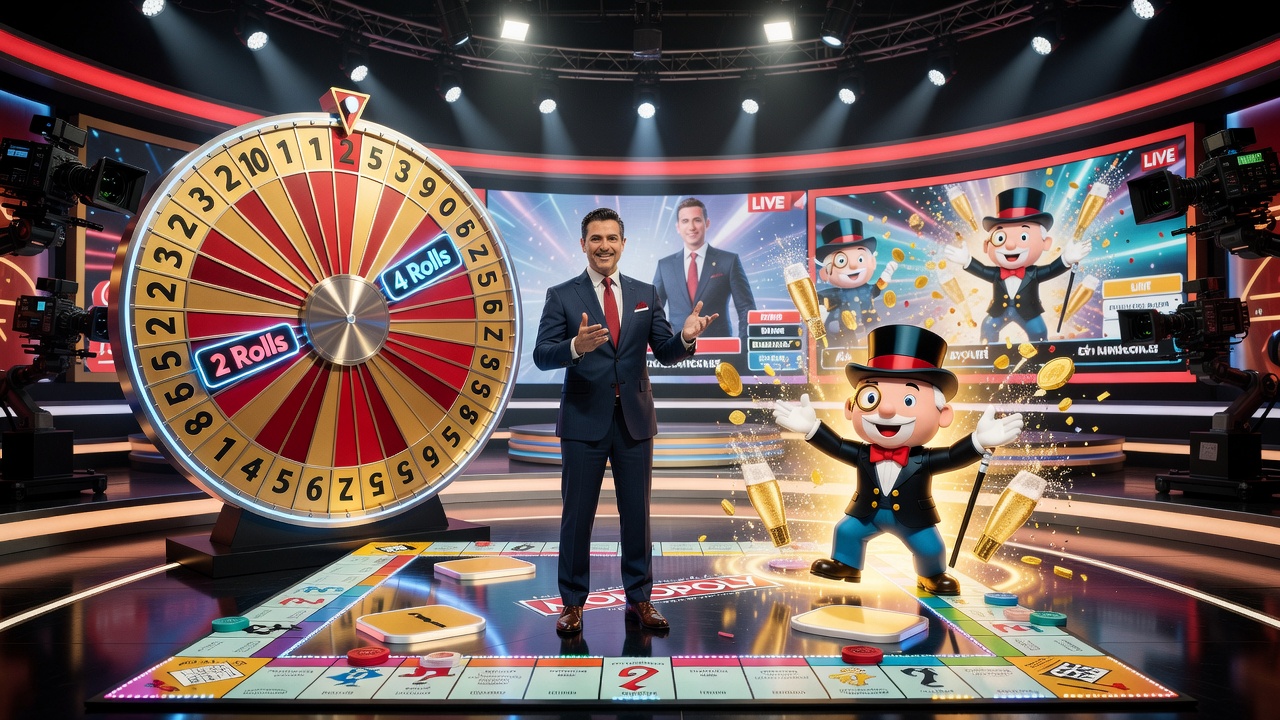
A three-dimensional wheel spun by a real host, a giant physical board tracking your position in real time, and a bonus round rendered in 3D animation that pulls you into a city built entirely of digital property tiles - that combination has turned a childhood board game into one of the most-watched formats in live-streamed gaming. Monopoly Live took the mechanics everyone learned around a kitchen table and rebuilt them for a camera, a wheel, and thousands of simultaneous players.
What makes the format worth understanding isn't nostalgia. It's the way the show blends a physical presenter, a spinning wheel, and a fully digital bonus board into one continuous broadcast. Players who want to try the mechanics firsthand can find the monopoly live game hosted through licensed platforms, where the wheel segments, multipliers, and bonus rounds run exactly as they do on the broadcast feed. Before placing a single bet, though, it helps to understand how the rounds are structured, what separates this from a standard board game night, and why the interactive layer changes the way people play together.
This piece breaks down the mechanics, the social dynamics of playing with others online, and the practical steps for joining a session - whether the goal is casual entertainment or a more calculated approach to the wheel.
What Is the Monopoly Live Game Show?
The format sits at the intersection of a televised game show and a casino-style wheel game. A live host stands beside a large, spinning wheel divided into segments - numbers, multipliers, and two bonus segments marked "2 Rolls" and "4 Rolls." Every spin determines a payout multiplier or triggers a trip into a 3D animated board where a giant Mr. Monopoly character rolls dice and moves around a virtual city.
Origins and Concept
The monopoly live game show was built by adapting the classic property-trading board game into a spectator format. Instead of buying and selling properties across a table, players watch the wheel decide outcomes, then follow the bonus round as it plays out on a separate animated board layered into the broadcast.
How the Wheel and Bonus Rounds Work
The wheel has 54 segments in total. Most carry a number - 1, 2, 5, or 10 - representing a straightforward multiplier on the bet placed on that number. Two segments trigger the bonus round, where the animated Mr. Monopoly moves around a digital board collecting cash prizes, multipliers, and occasionally a "Park Lane" or "Boardwalk" jackpot chance. The rarity of these bonus segments is what gives the round its tension - landing on one shifts the entire pace of the session.
Why It Differs from a Traditional Slot or Table Game
Unlike a slot machine, there's no random number generator hidden behind a screen. A real wheel spins, a real host announces results, and the bonus round unfolds visually rather than through a payout table. That transparency is part of the appeal - viewers see the mechanism, not just the outcome.
Setting Up for Monopoly Live Multiplayer Sessions
Playing solo is straightforward, but the format was designed with a shared audience in mind. Thousands of players can be watching and betting on the same spin at once, which changes both the atmosphere and the statistical reality of the game.
Joining a Shared Table
Every session runs on a single shared wheel - there's no private table version. When you log in, you're joining the same live broadcast as everyone else currently connected, placing bets on the same spin, watching the same host, and reacting to the same bonus rounds in real time. Monopoly live multiplayer isn't a separate mode; it's the only mode, since the wheel spins once for the entire audience rather than individually for each player.
Chat, Community, and Shared Reactions
Most platforms include a live chat panel running alongside the video feed. Regular players often recognize each other, track streaks, and react collectively when a bonus round hits a high multiplier. This communal layer is part of what separates the format from a solitary slot session - the shared anticipation before a wheel lands on the bonus segment creates a rhythm closer to watching a sporting event than spinning a reel alone.
Betting Limits and Table Etiquette
Because everyone shares the same spin, individual bet sizes vary widely within a single round - one player might wager a small amount while another bets significantly more on the same number. Platforms typically display minimum and maximum limits clearly before each round starts, and most hosts acknowledge big wins or long win streaks by name in the chat, reinforcing the show's game-show identity rather than treating it as an anonymous transaction.
Monopoly Online Live Stream: How the Broadcast Works
The technical backbone of the experience is the live video feed itself. Understanding how that stream is produced clarifies why the game feels different from both digital slots and pre-recorded content.
Studio Setup and Real-Time Hosting
Sessions are filmed in a dedicated studio, usually built to resemble a game-show set rather than a casino floor. A host manages the wheel, announces results, and interacts with the chat feed, giving the monopoly online live stream a presentation style closer to broadcast television than to a typical online casino interface.
Camera Angles and the 3D Bonus Board
When the wheel lands on a bonus segment, the video feed shifts from the physical studio to a computer-generated board. This transition is one of the format's signature elements - the physical wheel triggers a digital sequence, blending two production styles into one continuous broadcast without a break in the stream.
Stream Stability and Accessibility
Because the show runs continuously, with new rounds every couple of minutes, connection stability matters more here than in a game you can pause. A dropped stream mid-bonus-round means missing the outcome in real time, even if the result is later reflected in the account balance. Players relying on mobile data should expect the stream to consume more bandwidth than static casino games, given the constant video feed.
Rules and Mechanics of the Monopoly Live Board Game Format
The rules borrow heavily from the original board game's logic while simplifying it for a fast-paced broadcast. Understanding the core mechanics prevents confusion during the bonus round, where the pace picks up considerably.
Betting on Numbers vs. Bonus Segments
Before each spin, players choose where to place chips - on one or more numbered segments, or on the two bonus segments. Betting on a number pays out at that number's fixed multiplier if the wheel lands there. Betting on a bonus segment pays nothing directly but grants entry into the bonus round if it hits, where the payout comes from the dice rolls and board movement instead.
How Dice Rolls Translate to Prizes
Once inside the bonus round, Mr. Monopoly rolls two dice and moves around the board accordingly. Landing on a property tile awards a cash prize tied to that property's value, multiplied by whatever multiplier was collected earlier in the round. Passing "Go" adds a flat bonus. Rolling doubles grants an extra roll, which is how a single bonus round can escalate from a modest payout to a substantial one within seconds.
Chance Cards and Multiplier Stacking
Certain tiles trigger Chance cards that add extra multipliers directly onto the prize pool, and these stack cumulatively across the round. This stacking mechanic is the primary reason bonus rounds carry disproportionate weight in the game's overall payout structure compared to the standard number spins.
Playing the Monopoly Live Interactive Game: Tips and Strategy
No wheel game offers guaranteed strategy in the way skill-based games do, but understanding probability and pacing changes how a session feels and how a bankroll holds up over time.
Understanding the Odds Behind Each Segment
The wheel's 54 segments are weighted heavily toward the number 1, which appears far more often than the higher multipliers or the two bonus segments. This weighting means small, frequent wins are the norm, while the bonus round and high multipliers remain comparatively rare events. Recognizing this distribution helps set realistic expectations rather than chasing the bonus round every spin.
Managing Bankroll Across a Long Session
Because rounds run continuously, it's easy to keep betting through a losing streak simply because the next spin is seconds away. Setting a fixed session budget before starting, and treating each spin as an independent event rather than "due" for a bonus, keeps the monopoly live interactive game format enjoyable rather than draining.
Reading the Room: Live Chat as Information
Regular players often track how long it's been since the last bonus round appeared, sharing that information in chat. While this doesn't change the odds of the next spin - each spin is independent - it does shape the collective mood and can inform personal decisions about bet timing and size.
Comparing the Live Show to the Traditional Board Game
Longtime fans of the original board game often ask how much of that experience survives the transition to a live broadcast format. The answer is: quite a lot, structurally, though the pacing and player role change substantially.
Shared DNA: Properties, Chance, and Go
The bonus round preserves the core landmarks of the monopoly live board game - properties with recognizable names, Chance cards, and the "Go" tile - giving longtime fans a visual and thematic connection to the original game even though there's no trading or property ownership involved.
What's Lost and What's Gained
The negotiation, property trading, and multi-hour session of the traditional board game are gone entirely. In exchange, the format gains speed, a shared audience experience, and outcomes determined by a physical wheel rather than turn-based play among a small group of friends.
Frequently Asked Questions
Do I need to understand the original Monopoly board game to play the live version?
No prior knowledge is required. The bonus round borrows visual elements like property names and Chance cards, but the actual mechanics - betting on wheel segments and watching dice rolls play out automatically - don't involve trading, negotiating, or owning properties.
Can I play privately, or is it always with other people?
The wheel spins once for everyone connected at that moment, so there's no private or solo version. Every session is inherently shared, though you place your own bets independently of what others choose.
How often does the bonus round actually appear?
The two bonus segments make up a small fraction of the wheel's 54 total segments, so they appear far less often than the numbered segments. Exact frequency varies spin to spin since each outcome is independent, but expect several rounds of numbered spins between bonus appearances on average.
What internet speed do I need for a smooth stream?
A stable broadband or strong mobile connection is recommended, since the format relies on continuous video rather than static graphics. Buffering during a bonus round means missing the dice rolls in real time, even though the final result still registers on your account.
Is there a way to predict when a bonus round will hit?
No. Each spin is an independent event, and the wheel doesn't carry memory of previous results. Patterns discussed in chat about a bonus round being "overdue" are statistically meaningless for the next spin.
What happens if I lose connection during a bonus round I bet on?
Your bet and any resulting payout are recorded on the platform's server regardless of your connection status, so reconnecting afterward typically shows the updated balance. You simply miss watching the animation unfold live.